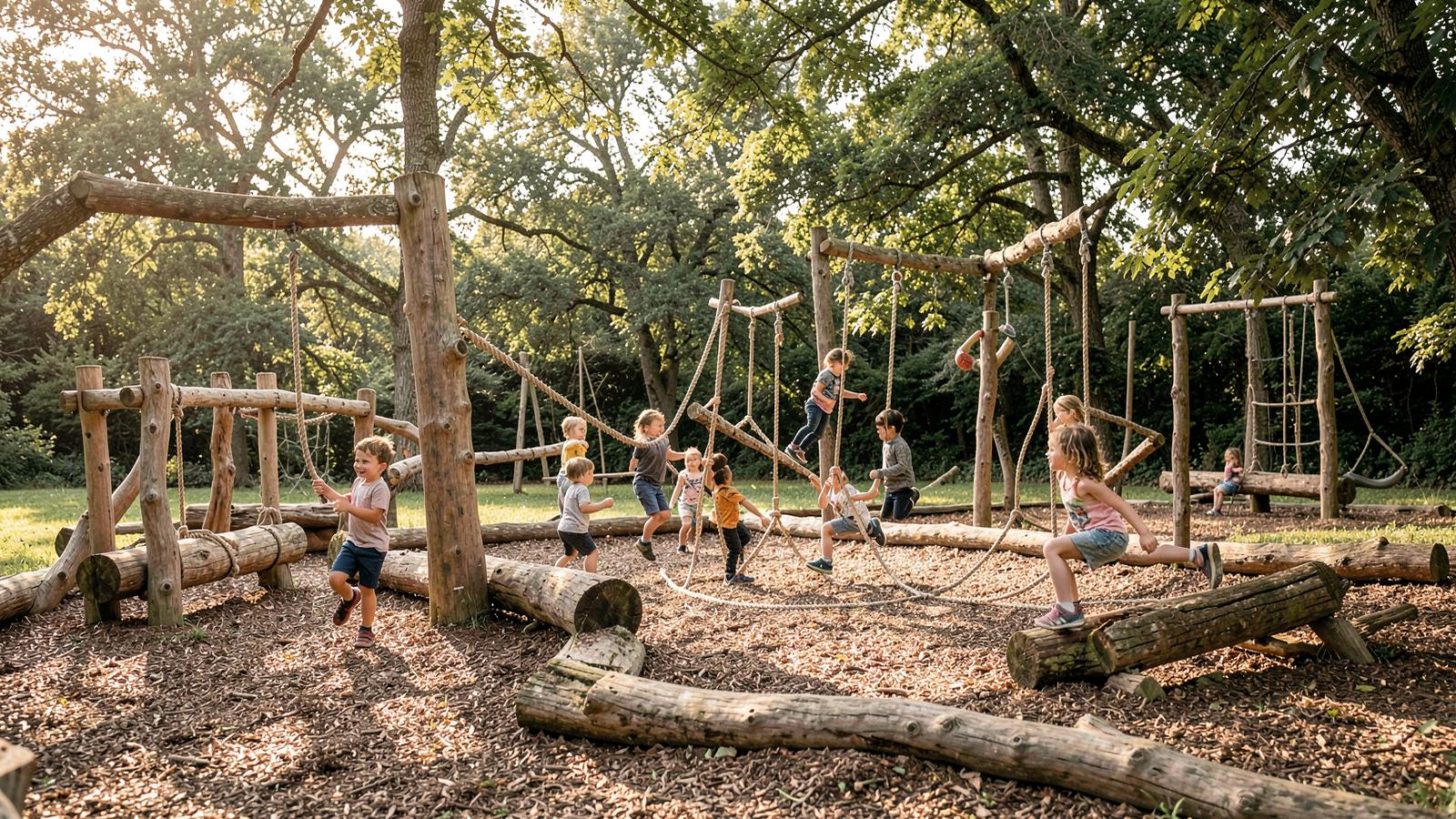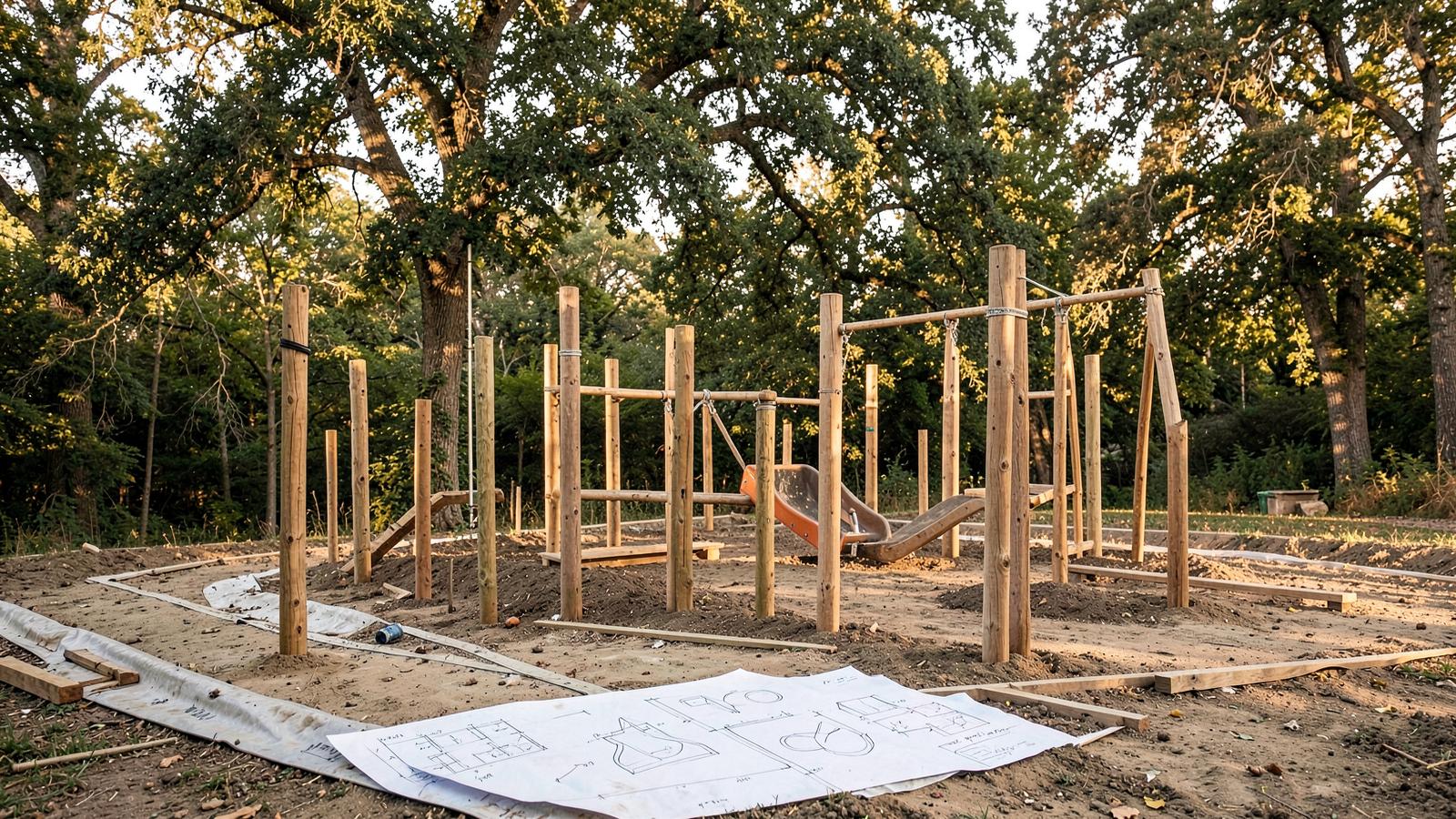
Residential & Garden Play
Bespoke Garden Play Structures: A Homeowner’s Guide
A domestic play structure should belong to the garden, grow with the children and feel considered from every window.
By Got Children First Team · 11 September 2026 · 3 min read
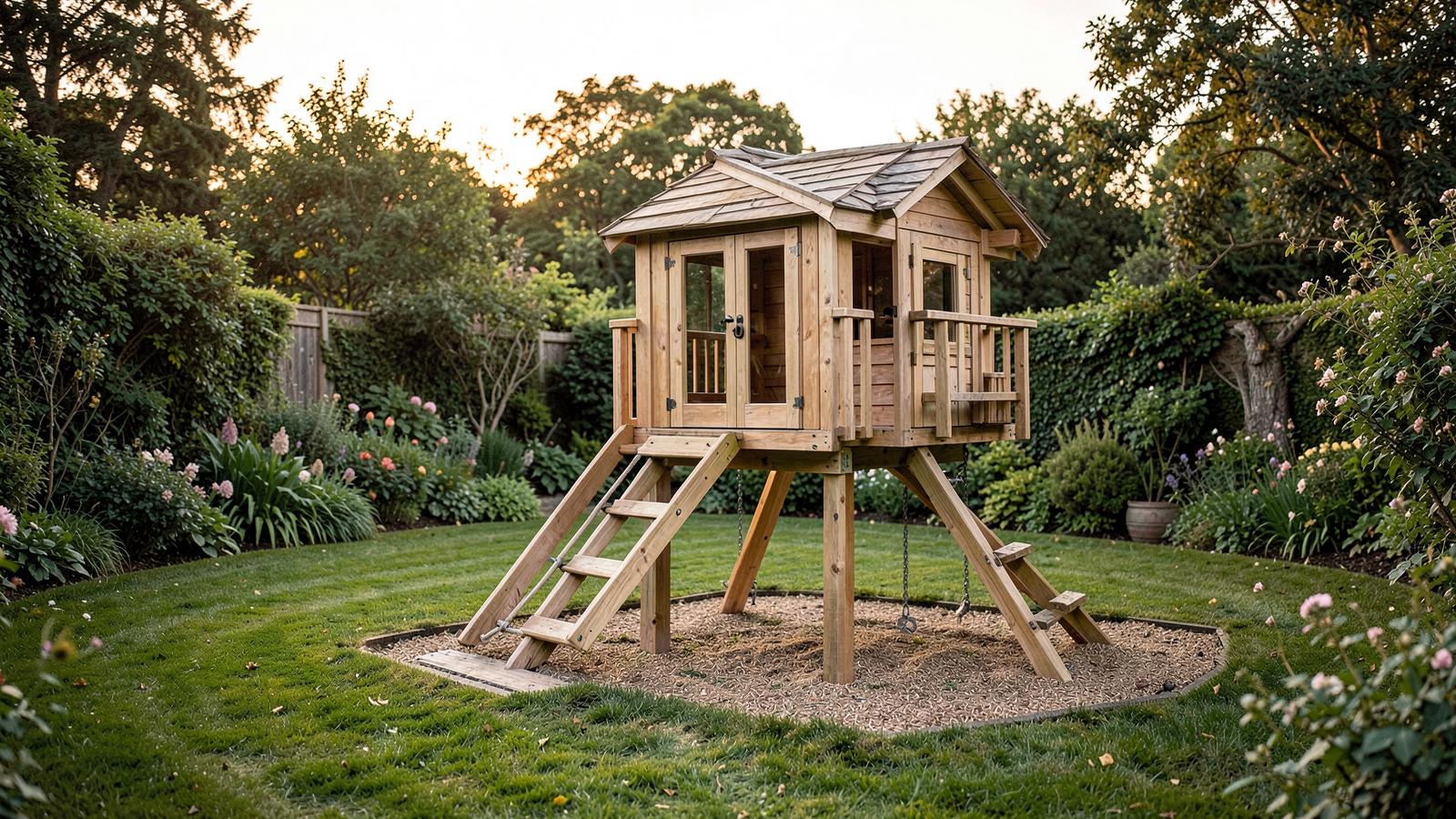
Commissioning a garden play structure is different from choosing a flat-pack set. It has to hold a child's interest, sit comfortably within a domestic landscape and weather gracefully without dominating everyday family life.
Start with how your family plays
Begin with behaviour, not a shape. Do your children seek energetic climbing or quieter dens and imaginative games? Are they close in age? Does the garden regularly fill with friends? How might their confidence and interests change over the next five years?
These answers influence height, routes, social spaces and whether one flexible structure or several smaller moments will work best.
Read the garden before drawing
Slope can become an asset: a bank may provide the level change for a slide or scramble route. Mature trees can shape the composition, although their health and root protection areas must be professionally assessed before attachments or groundworks are considered. [CLIENT VERIFY]
Boundaries and overlooking deserve early thought. Consider neighbours’ windows, the view from the house, evening shade, drainage, lawn maintenance and how materials will reach the build area. A structure should feel settled into the garden rather than parked in its centre.
What bespoke should achieve
Bespoke does not need to mean enormous. Its value lies in fitting one garden and one family precisely. A modest corner tower with a well-placed slide or net can offer more than a large generic unit squeezed into the wrong position.
It can also allow a structure to evolve. Foundations and post spacing might anticipate a later bridge, cargo net or monkey-bar route. Discussing future possibilities at concept stage is usually simpler than retrofitting them.
Concept possibilities
These are design inspirations, not completed-project claims or catalogue products:
- A compact corner tower: one strong feature and a restrained footprint for smaller gardens.
- Linked low platforms: movement, balance and imagination without relying on significant height.
- A den and lookout: an enclosed lower space with a climbing route to a modest platform.
- A rope and timber route: tactile natural materials and several ways through at a domestic scale.
- Mud, sand and water making: a lower-level area for experimentation alongside physical challenge.
Every concept should be redrawn around the garden, the children and the family’s preferred character.
Design for longevity
A young child may need an easy route and close adult support. Older children need enough ambiguity and challenge to invent their own use. Multiple routes, social platforms and spaces that are not over-themed help a structure remain relevant.
Natural timber can age attractively, but species, ground contact, fixings and finishes affect maintenance. Ask what should be checked, cleaned or refinished, how often, and which parts are expected to wear first.
Safety in a domestic setting
A private garden differs from a public playground, but thoughtful fall space, surfacing, openings, handholds and age-appropriate challenge still matter. The designer should explain the basis of their recommendations and any ongoing inspection needs. [SOURCE REQUIRED]
Budget for the whole intervention
Design time, ground conditions, access, foundations, materials and skilled installation all affect price. Discuss an honest range early. If the budget is finite, protect the central play idea and simplify secondary features rather than compromising every element.
Explore our residential play approach, where concept imagery is clearly labelled as inspiration. A first conversation should be about how your family uses the garden now and what you want it to feel like in years to come.