
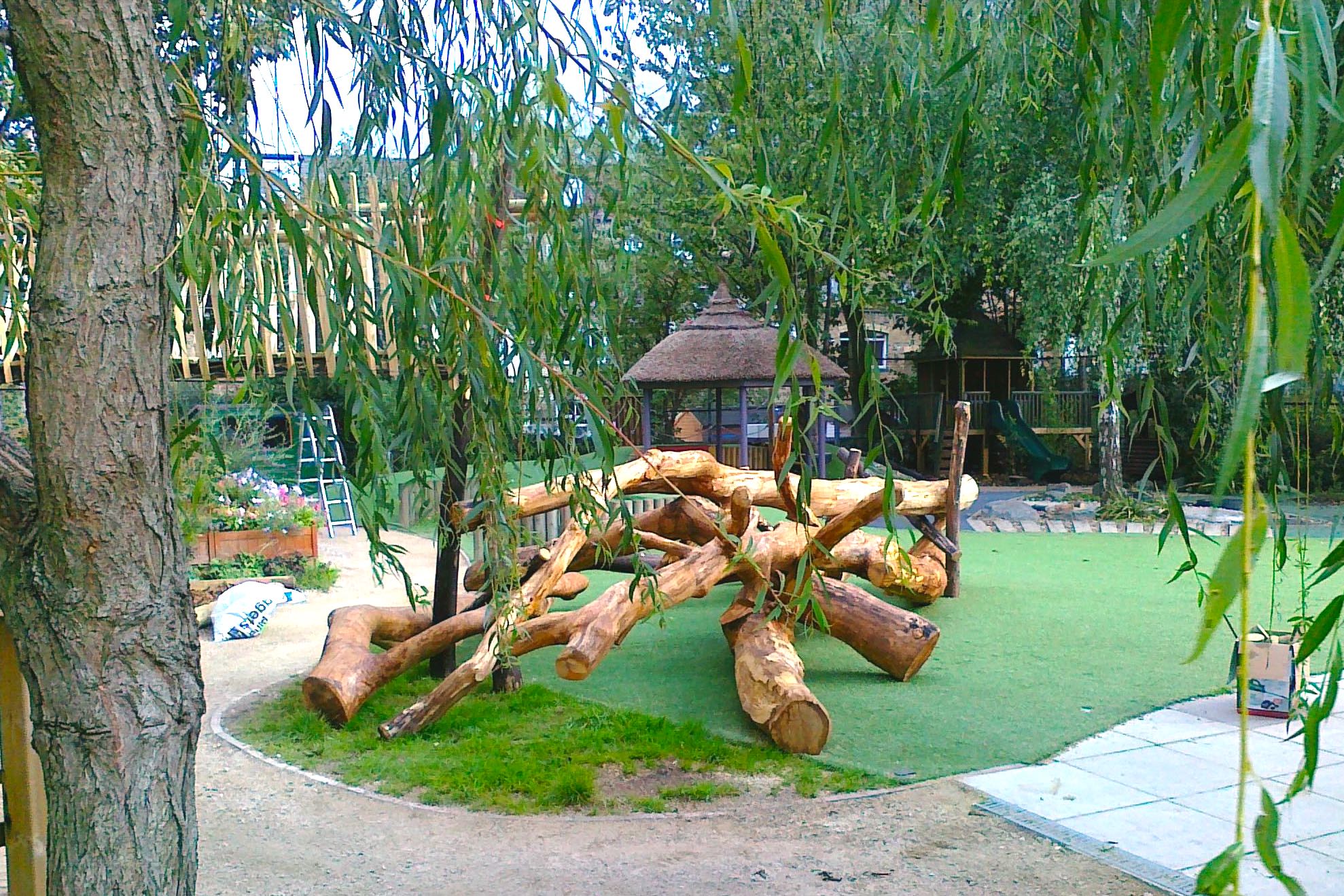
Mud kitchens & creative play
Places for mixing, making, pretending and experimenting.
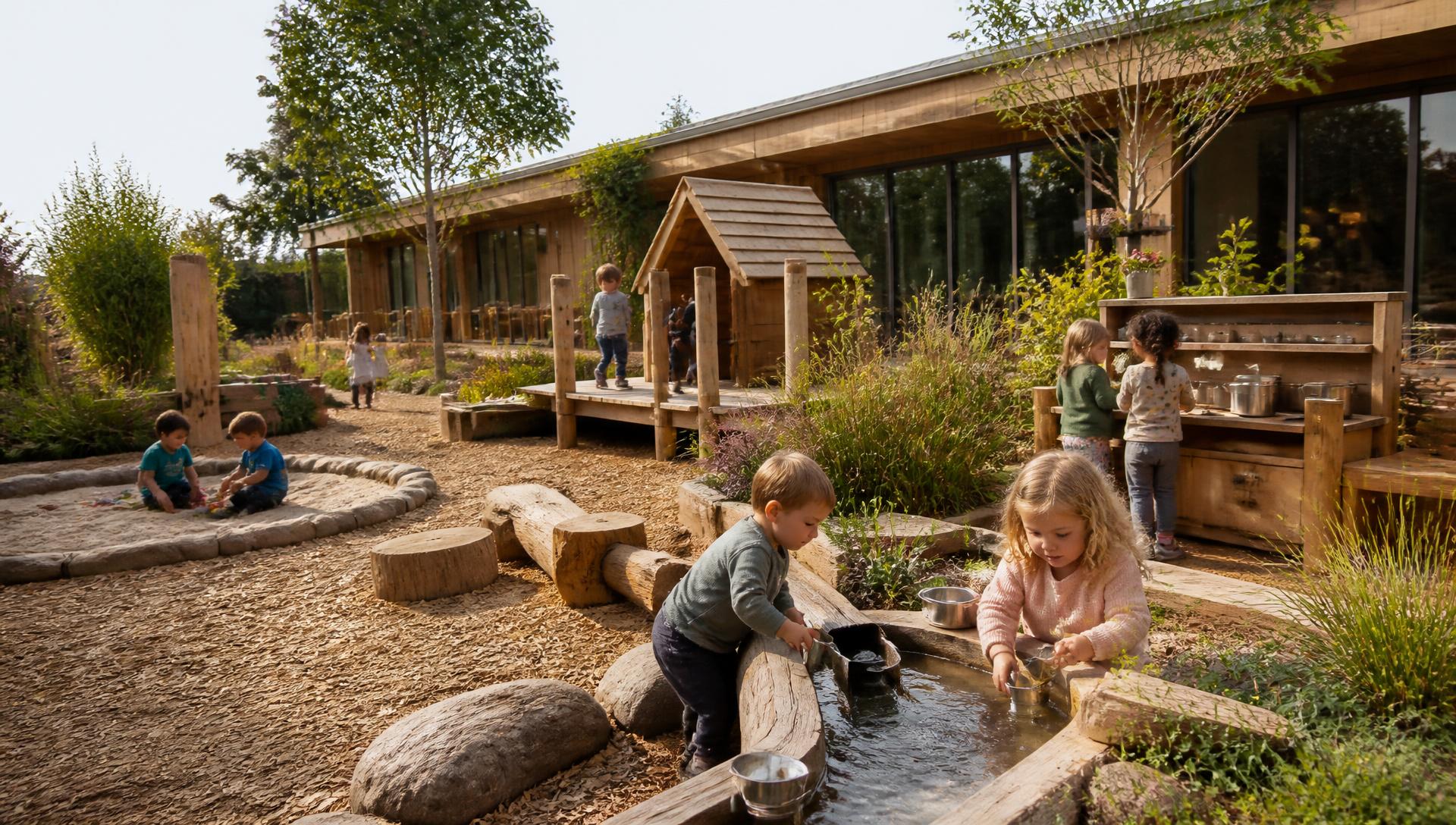
Nursery & early years
Natural play environments designed for exploration, sensory play, movement and imagination in the early years.
Got Children First creates bespoke nursery play spaces that invite children to touch, climb, build, discover, experiment and imagine.
For younger children, even a small outdoor space can become an entire world. A mound becomes a mountain. A channel becomes a river. A timber platform becomes a shop, castle, boat or stage.
Our approach focuses on environments that let children decide how they want to play, rather than prescribing one activity. That usually means:
Play first. Everything else follows from that.
Our approach
Different textures, materials, sounds, water, sand and natural elements.
Opportunities to crawl, balance, step, climb and build physical confidence.
Open-ended structures that can become whatever children imagine.
Mud kitchens, digging, water and materials children can manipulate.
Spaces for playing alongside others, cooperating and communicating.
Carefully judged opportunities for children to test what their bodies can do.
What we build
Early-years gardens work best as a set of small, rich moments at a child's own scale: things to pour, mix, climb gently and imagine into something else.
Places for mixing, making, pretending and experimenting.
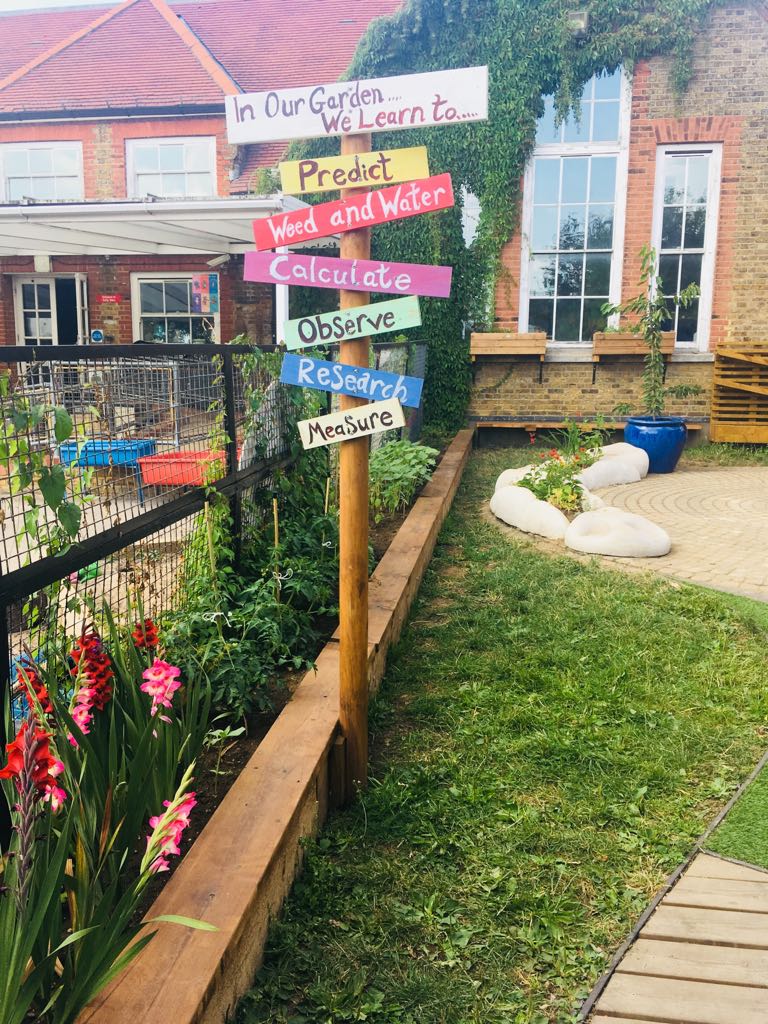
Hands-on environments that encourage sensory exploration and discovery.
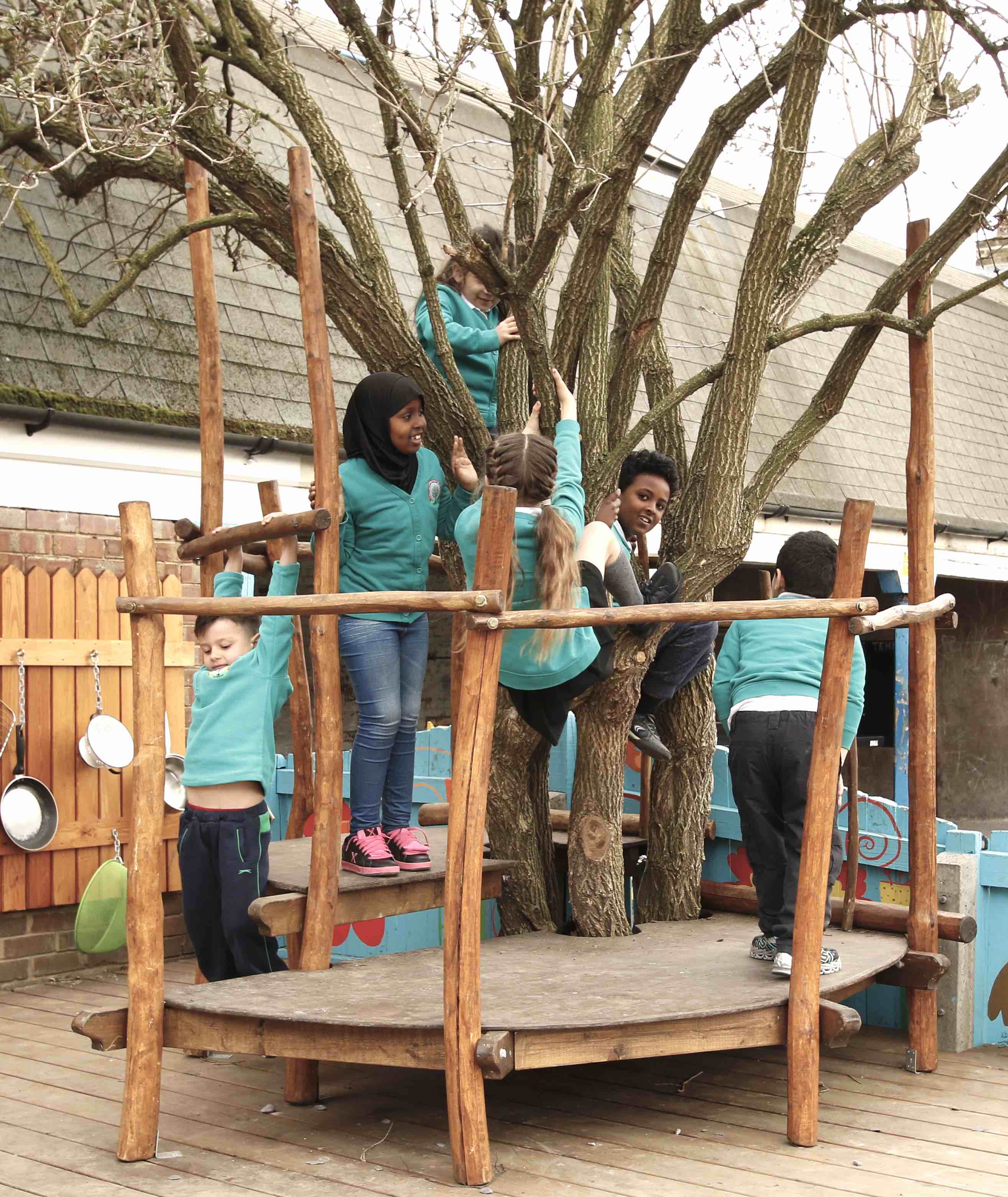
Appropriately scaled structures that allow younger children to climb, balance and build confidence.
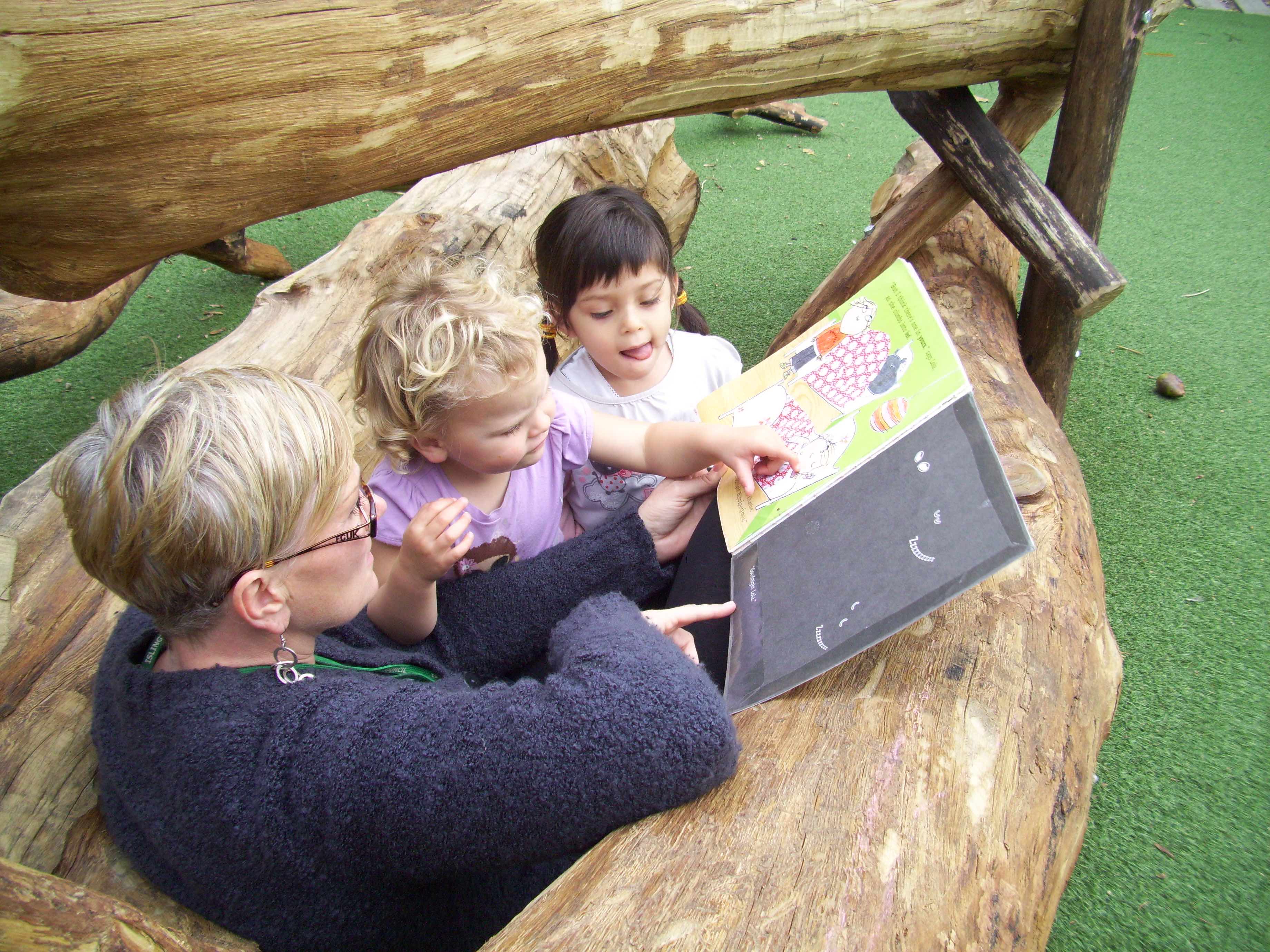
Open-ended structures that can become dens, houses, shops, stages or whatever children imagine.
How we design
Sensory, imaginative, social and physical experiences can all form part of an early-years environment. The 16 Types of Play give us a way to check that even a small nursery garden still offers real variety.
The emphasis stays on play first, with development following naturally.
Safety, durability & practicalities
Early-years outdoor space carries its own requirements, and we design around them from the start.
Relevant projects
Completed project
Southwark, London · Nursery
A hand-built water wall with channels, pumps and vessels for pouring, damming and experimenting, designed for two- to five-year-olds in a nursery garden.
Water wall • Channels • Sand and digging area
View project →
Completed project
Newham, London · Early Years Setting
Low rope bridges, a climbing platform around a mature tree and sensory planting designed for the very youngest children in an early-years setting.
Rope bridge • Tree platform • Sensory planting
View project →
How a project works
Tell us about the site, the children, the budget and what the space needs to achieve.
We visit the site, understand the environment and identify the opportunities.
We develop a bespoke concept around the children, setting and intended play experiences.
Our team brings the design to life using carefully selected materials and skilled construction.
The structure is inspected, handed over and ready for children to make it their own.
FAQ
Often the small gardens gain the most. A well-designed corner can add several types of play without losing floor space.
Yes, with the right design. Pumps and channels can be isolated in winter and drainage planned in from the start.
Heights are kept appropriate for the age range and matched with suitable surfacing, with challenge coming from variety rather than height.
Yes. We usually keep mature trees and good planting and design the new play around them.
Tell us about your garden, your age ranges and how you'd like children to use the space.