Schools & Early Years
School Playground Design: A Complete Guide for Primary Schools
How to balance play value, sightlines, inclusion, durability, phasing and the realities of a busy school day.
By Got Children First Team · 11 September 2026 · 4 min read
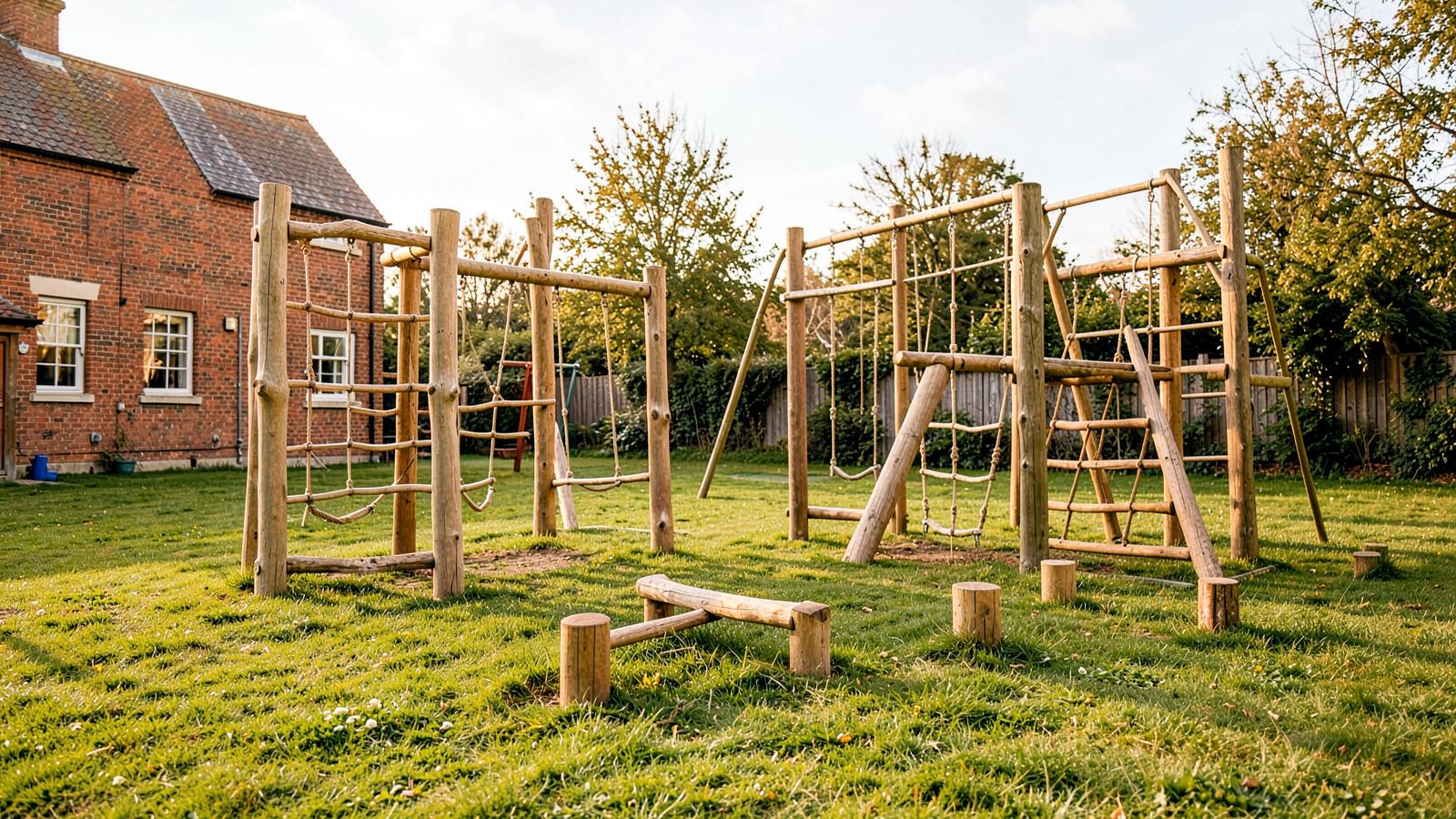
If you are a headteacher, business manager or governor considering a playground project, you are probably balancing a tired space, a finite budget and a school community with strong opinions. A well-run process helps turn those pressures into a clear, shared brief.
Why a school is a distinct design setting
A school playground has intense periods of use, a duty of supervision and a wider role in learning and wellbeing. Reception children and Year 6 pupils may share the same footprint while needing different scales of challenge, social space and support.
The space may also need to work for PE, outdoor learning, breakfast clubs, intervention groups and community use. These needs should shape the layout before equipment is discussed.
Begin with the daily routine
Observe arrival, break, lunch and home time. Talk to the people who supervise daily. They know where conflicts recur, which routes become congested, where sightlines fail and which existing features children genuinely value.
Pupil voice is equally important. Children can identify the overlooked corner, the game that needs more room or the lack of somewhere calm to sit. Consultation is most useful before a concept exists, when it can still change the answer.
Plan clear but connected zones
Zoning can help different activities coexist without making the playground feel fragmented. Active movement, ball games, imaginative play, making, sensory exploration and quiet retreat each have different spatial needs.
Sightlines matter, but total visibility is not the same as good supervision. Low planting, level changes and carefully placed den-like elements can create discovery without forming unmanaged blind spots.
Make inclusion meaningful
Inclusion is not achieved by adding one accessible panel. Consider how children with physical, sensory, communication or social needs can participate across the whole offer.
Routes should connect children to the action. Platforms may offer transfer points or broad social spaces. A child who chooses to watch before joining should have a dignified place to do that. Sensory and quiet options should sit within the life of the playground rather than being isolated at its edge.
Design for concentrated use
School play spaces experience heavy wear in short bursts. Timber, ropes, fixings, planting and surfacing must be specified for that pattern. Ask what daily visual checks, periodic inspections and planned maintenance each choice requires.
Durability is also about layout. Narrow bottlenecks and single routes can create queues and concentrated wear. Multiple ways through a structure spread use and create richer play.
Link play and learning without over-programming
Outdoor classrooms, growing spaces, water play and natural materials can support curriculum activity. Yet the playground should still leave room for children to make their own rules and stories. The same platform might support a lesson in the morning and become a ship at lunchtime.
Our school playground approach explains how these priorities fit together.
Budget and phase with care
Many schools combine capital budgets, grants and fundraising. A masterplan can protect the long-term idea while allowing work to happen in coherent stages. Each phase should be useful on its own and should not need to be removed when the next phase begins.
Be open about the full budget, including drainage, access, removal, surfacing and making good. If funds are limited, a few carefully designed elements with strong play value are often better than a long list of compromised ones.
Learn from genuine school settings
The Ashmead Primary School project and Galleywall Primary School project show how designs respond to their own settings rather than applying one template. Look at the relationship between structures, routes and open space, not only the individual components.
A useful first meeting
Bring a plan if you have one, but also bring the practical knowledge of staff and children. Be ready to discuss numbers, age groups, access, supervision, maintenance and funding. A good designer should ask how the school works before suggesting what it should buy.